
Bremgarten and the Habsburgs
Around the year 1000, Radbot and his brother Rudolf inherited a manorial estate from their father Lanzelin in the area that would later become the town of Bremgarten. In 1050, a chapel was built on the banks of the Reuss River. In 1135, the name Bremgarten appeared for the first time in a deed of donation.
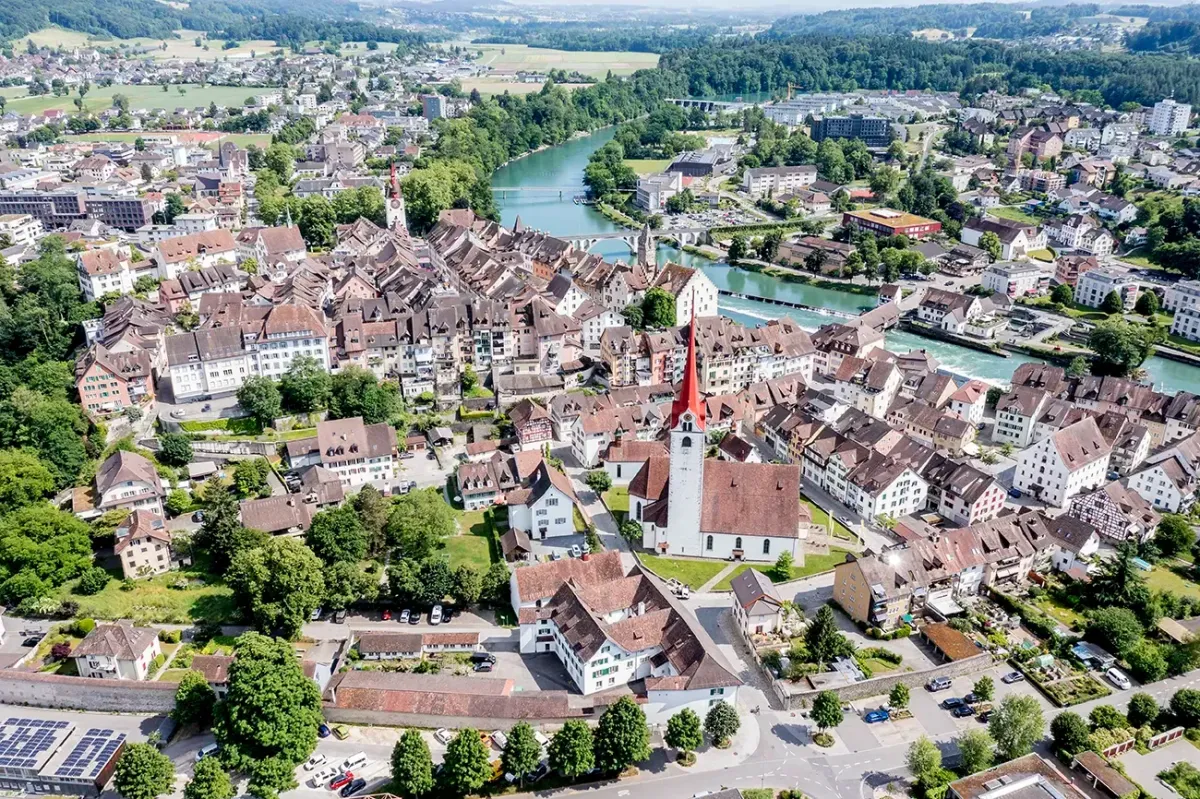
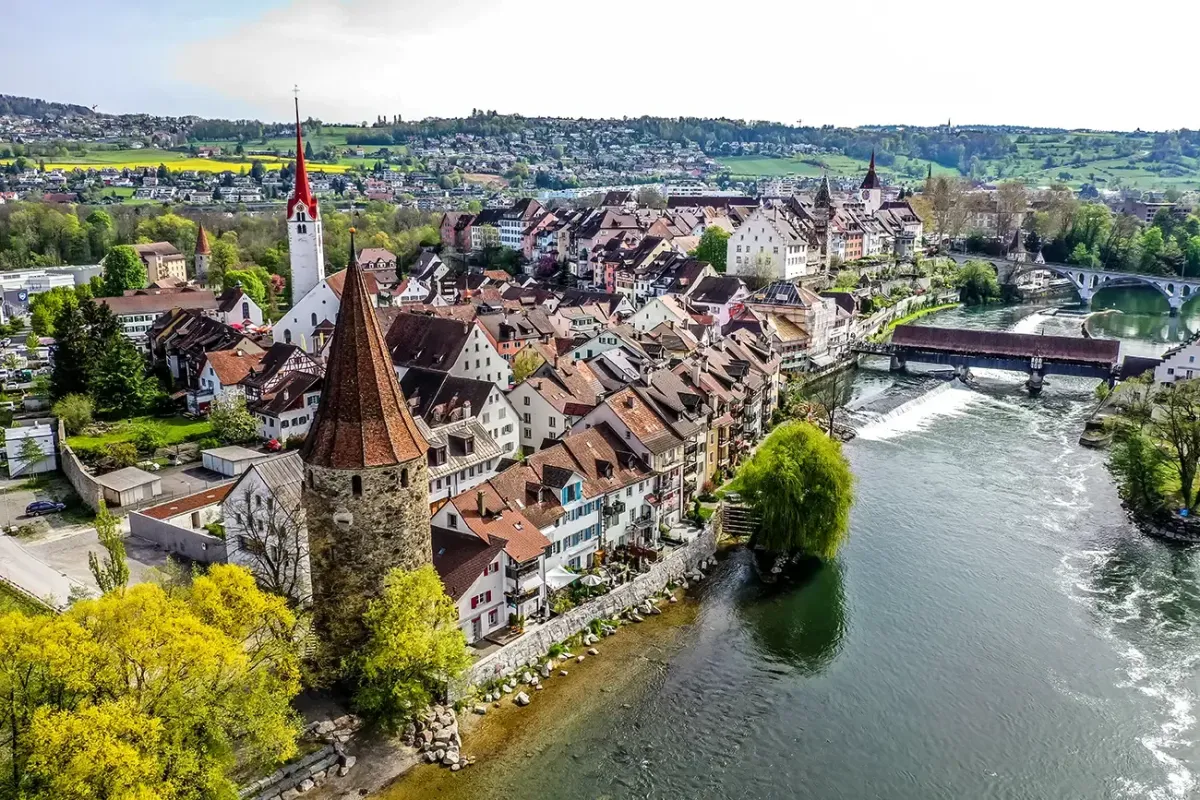
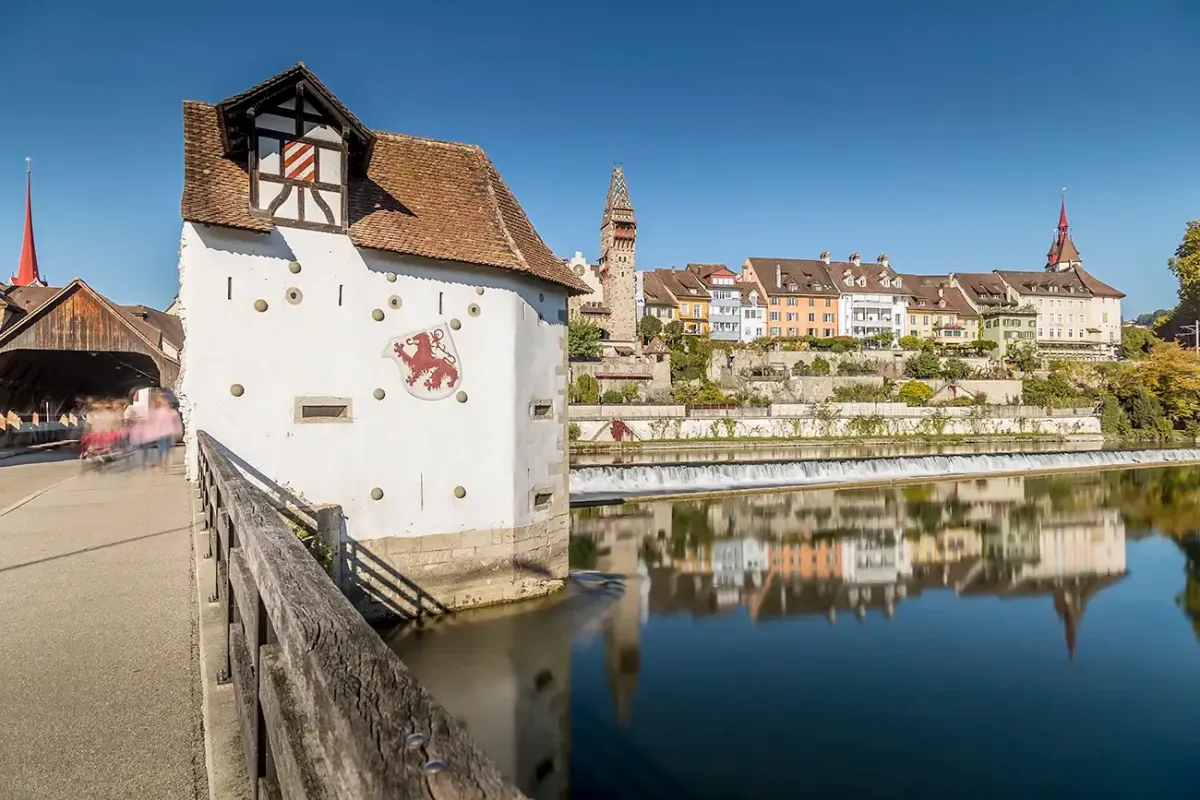
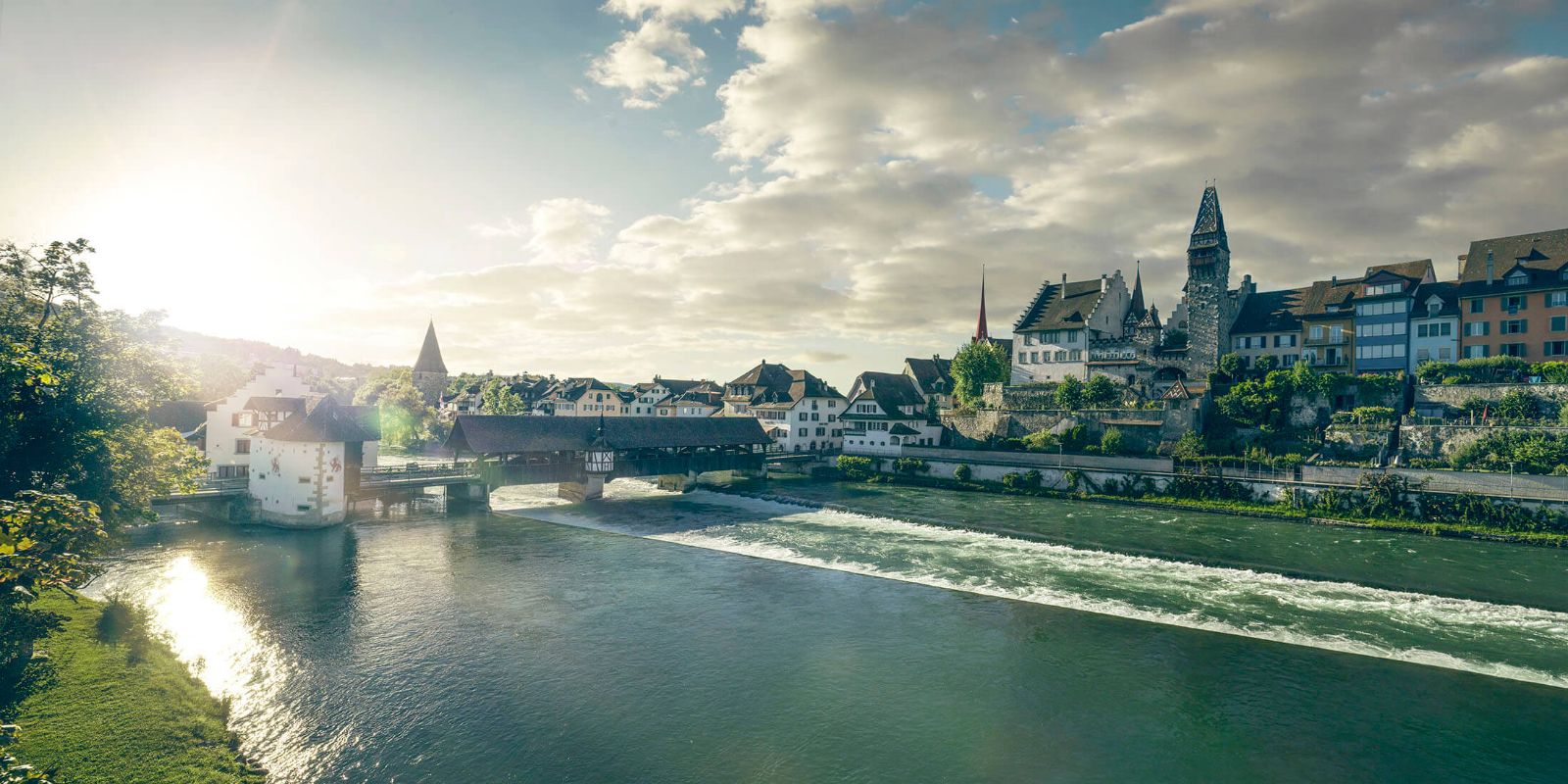
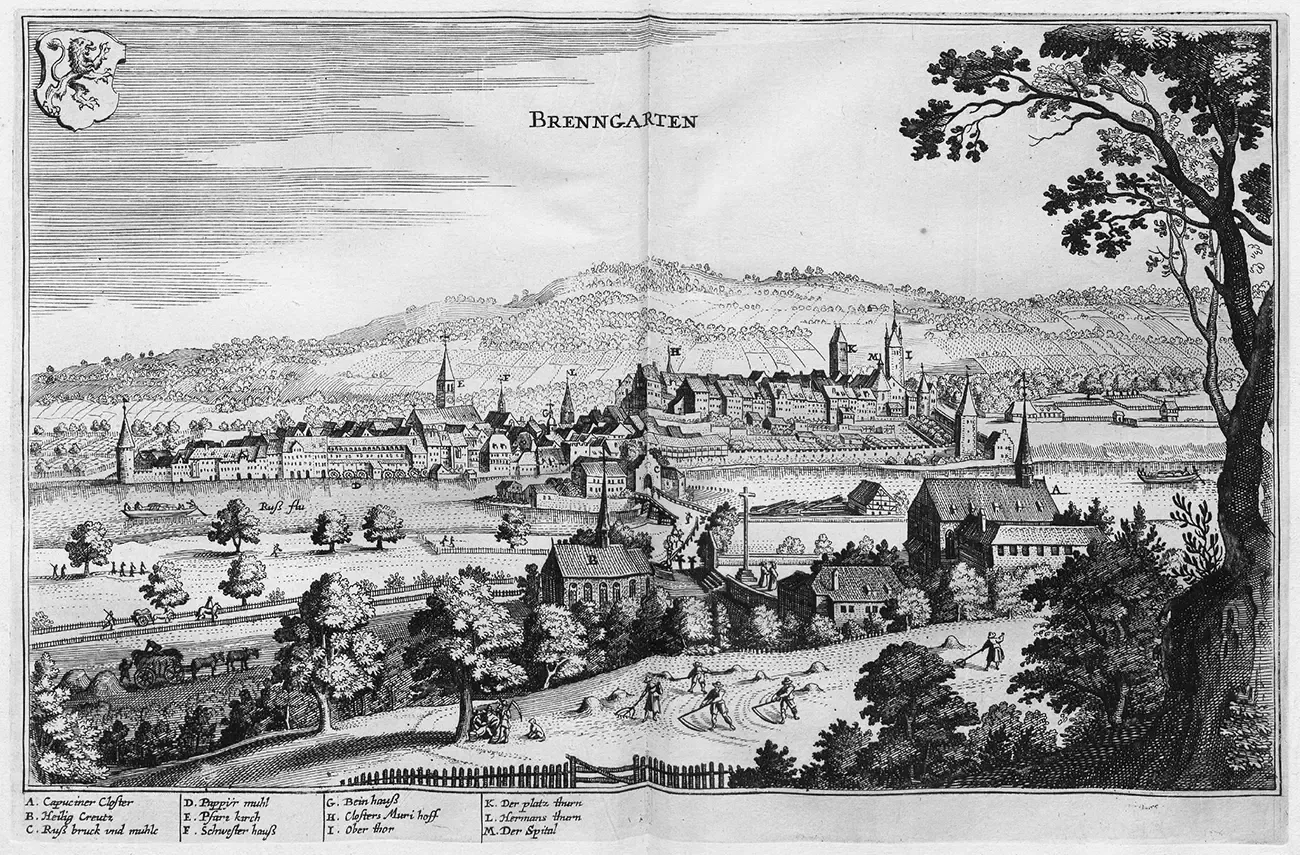
According to historians, Bremgarten, protected on three sides by a bend in the Reuss, was already considered a town planned by the Habsburgs as early as 1200. Central to its strategic importance and also to its role as a market site was the construction of a bridge (page in German) over the Reuss in the 13th century, for which tolls could be levied. For centuries, this bridge remained the only river crossing in the area.
Count Rudolf IV stayed in Bremgarten several times between 1246 and 1267 to conduct legal business, but not after his election as king in 1273.
Bremgarten, which was granted town rights, was favoured and substantially fortified by the Habsburgs, and in 1379 it was also obtained the right to administer criminal justice (page in German). Men from Bremgarten fought for the Habsburgs at Morgarten in 1315 and at Sempach in 1386.
In April 1415, during their conquest of Aargau, the Swiss Confederates also besieged Bremgarten after taking Mellingen (page in German). Faced with superior forces, the town quickly surrendered. From then on, the town belonged to the County of Baden (page in German), a common lordship. In the Old Zurich War, the town sided with Zurich and the Habsburgs. The alliance was defeated, but Bremgarten remained part of the Swiss Confederation.
Traces of the Habsburgs today
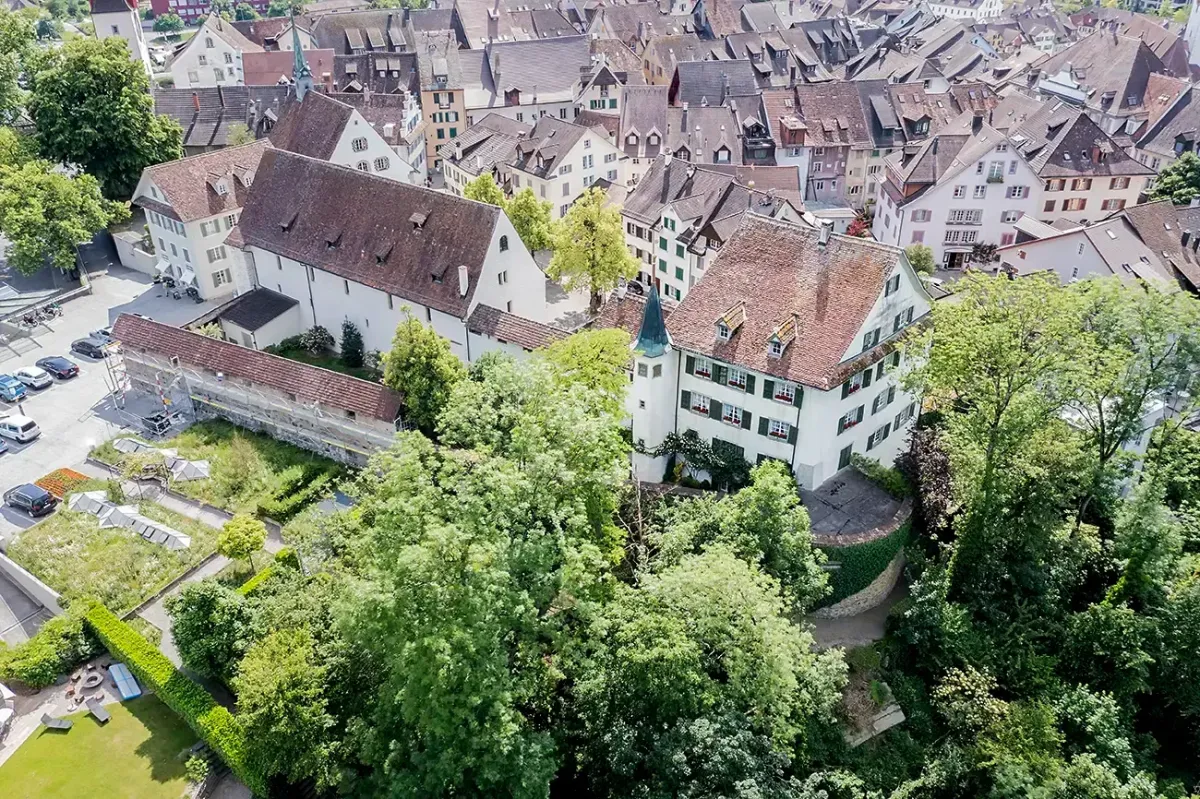
More than 600 years have passed since the Habsburgs lost Aargau. Nevertheless, there are still reminders of their time in Bremgarten – one of Switzerland's protected townscapes of national importance – such as the small castle (page in German) in the old town, first mentioned in 1238 as ‘turn ze Bremgarten’. Parts of the medieval keep have been preserved there.
The Hexenturm (Witches' Tower) (page in German), first mentioned in documents in 1415, can now be visited by groups. Inside, you can see the former prison with its three-metre-thick walls, trapdoor and wooden lift wheel.
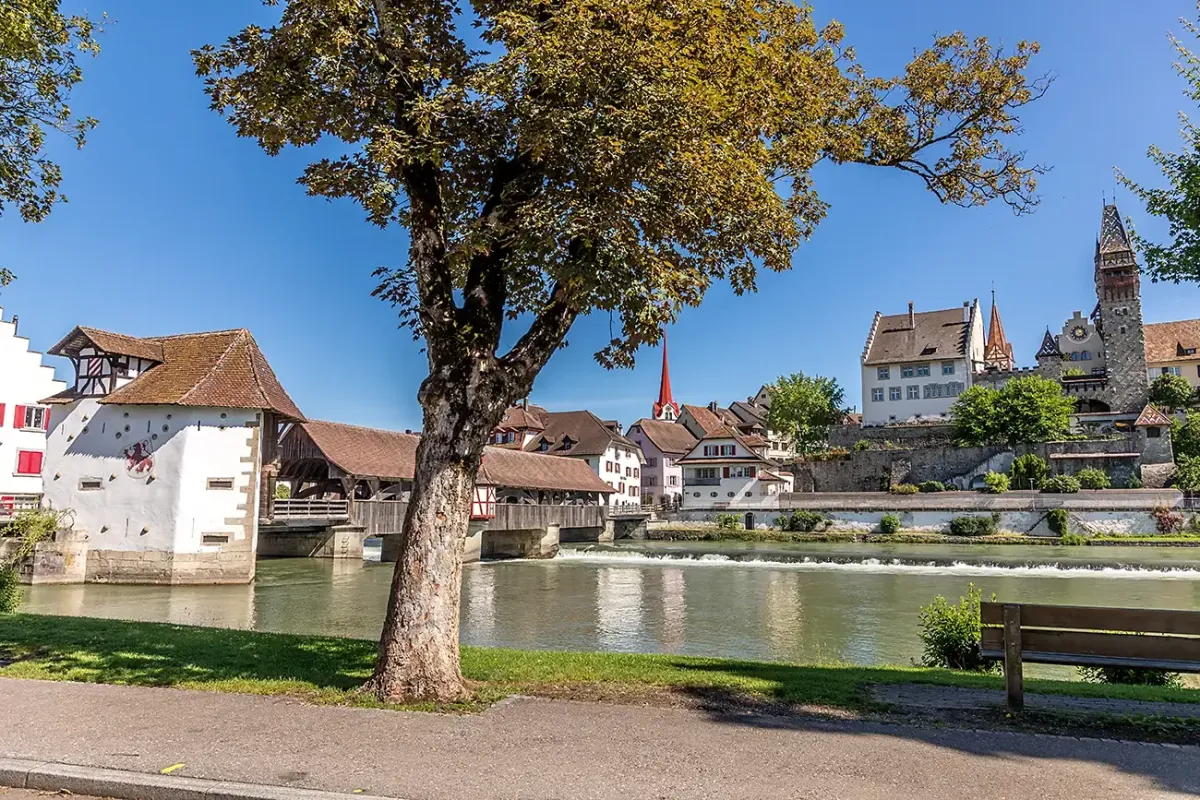
The wooden bridge, first mentioned in 1281, was destroyed by fire in 1434 and has since been replaced and renovated several times.
The city proudly bore the Habsburg heraldic emblem in its coat of arms, a red lion rampant on a white background (yellow in the case of the Habsburgs themselves). It retained this and the imperial eagle as symbols of a free imperial city, as well as its extensive independence, until the demise of the Old Swiss Confederacy in 1798. The upright red lion on a white background is also the current coat of arms of the town and district of Bremgarten. Both coats of arms still adorn the armoury as murals.
Bremgarten today