
Brugg and the Habsburgs
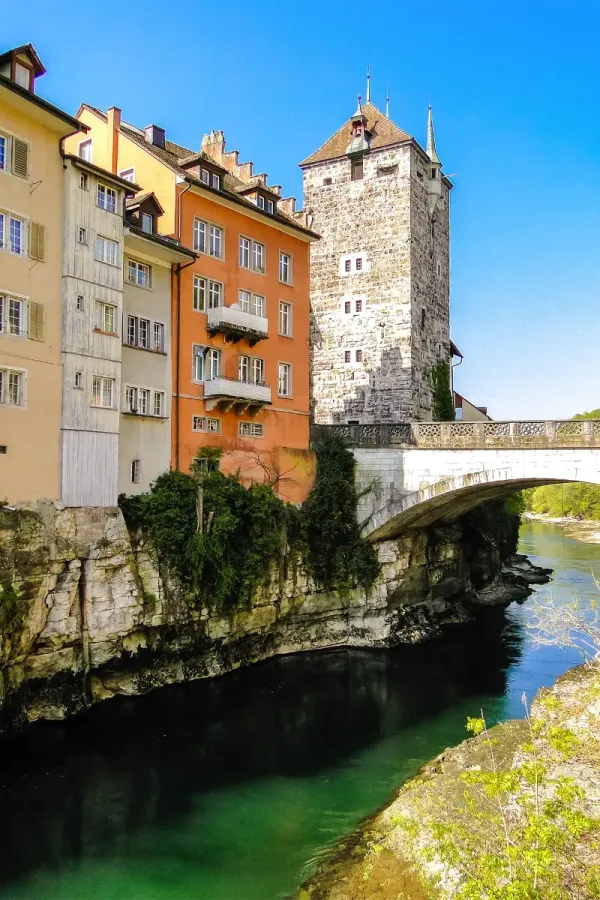
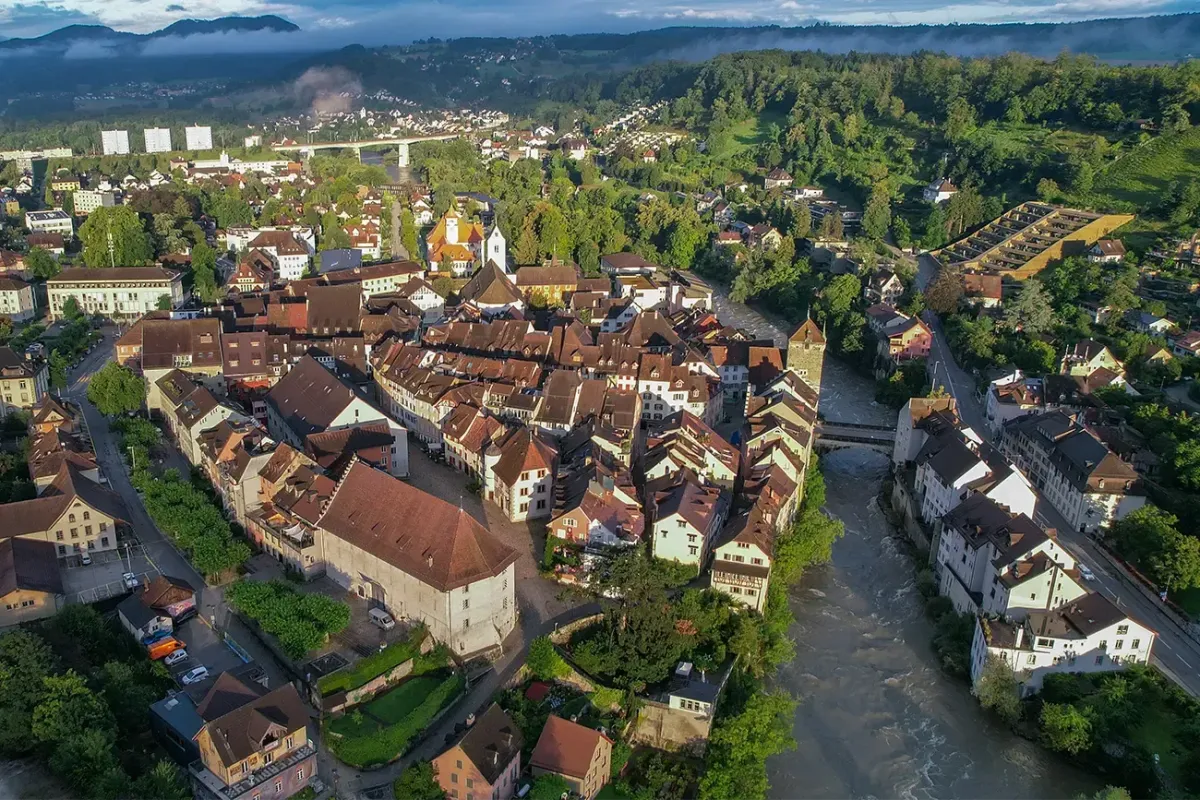
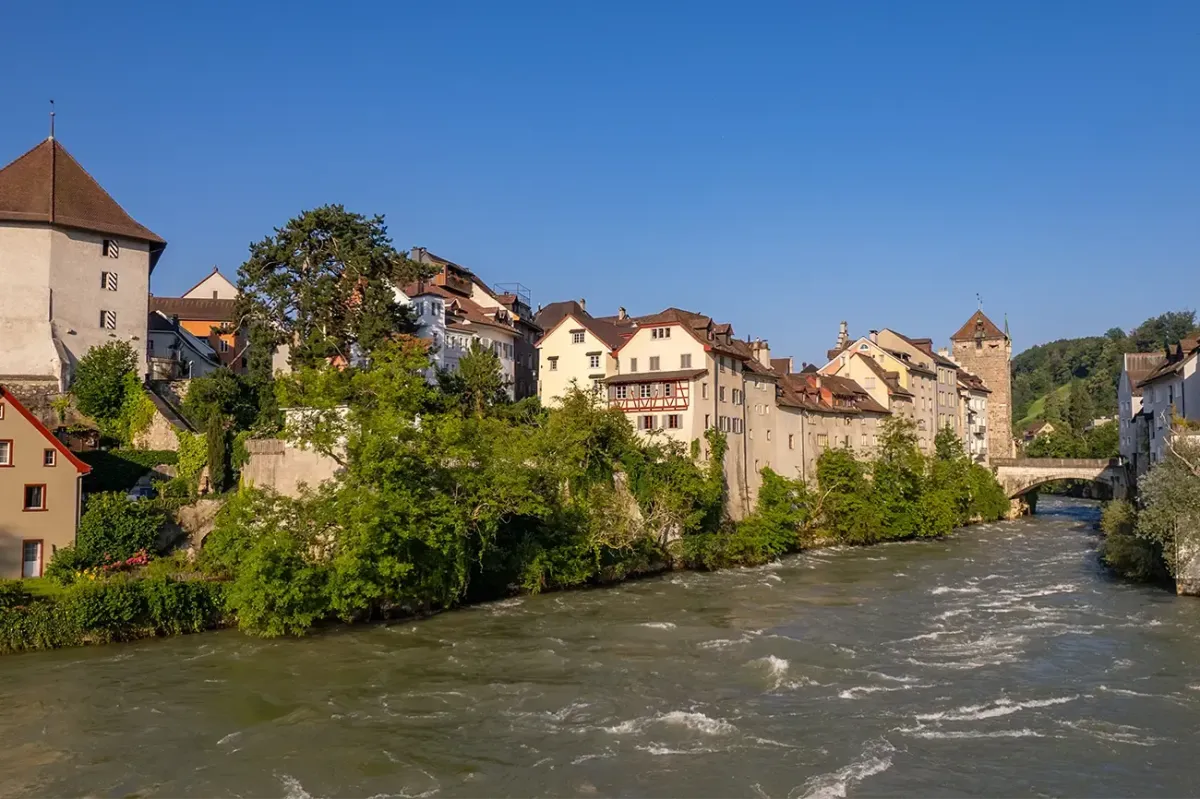
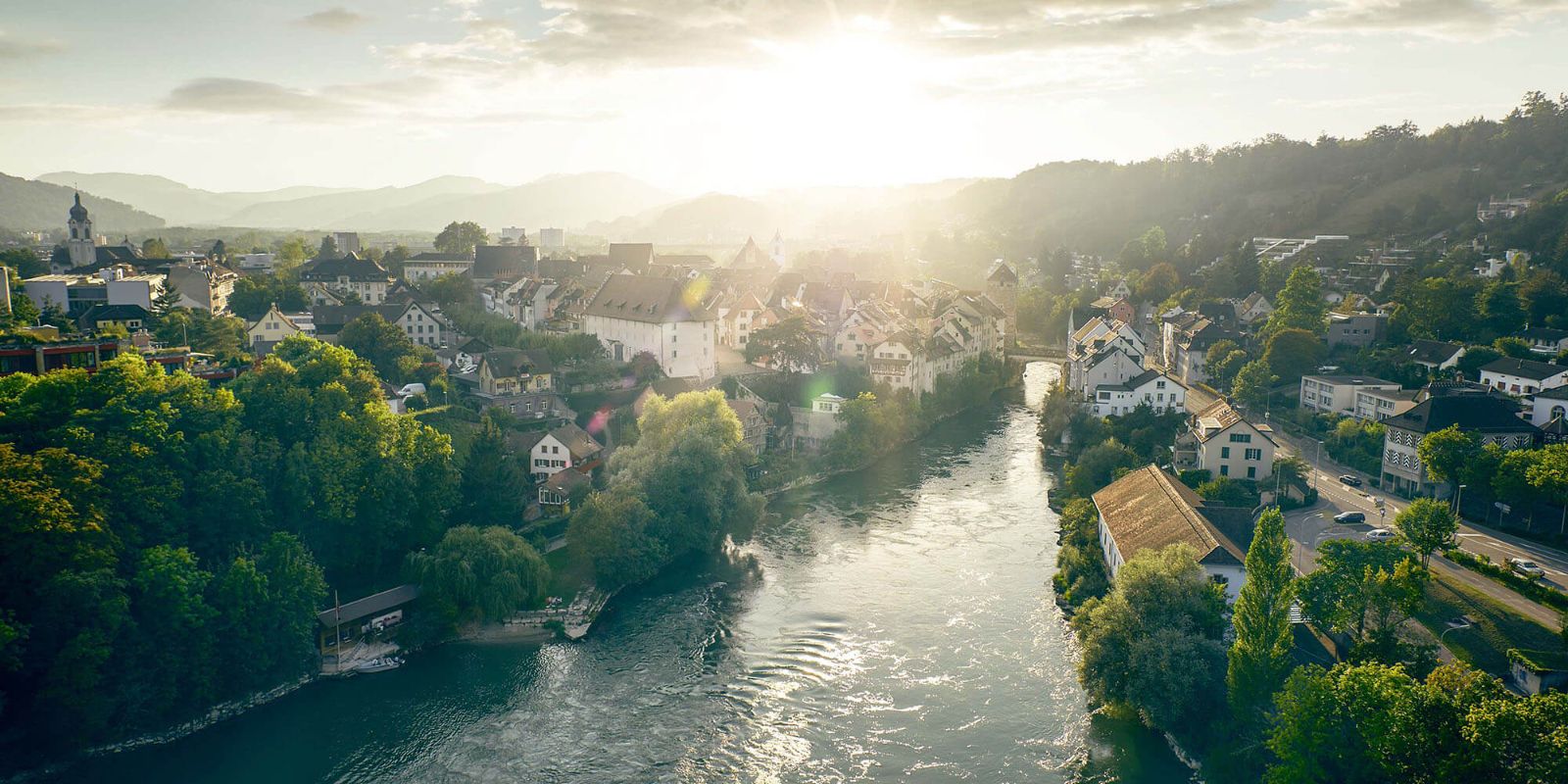
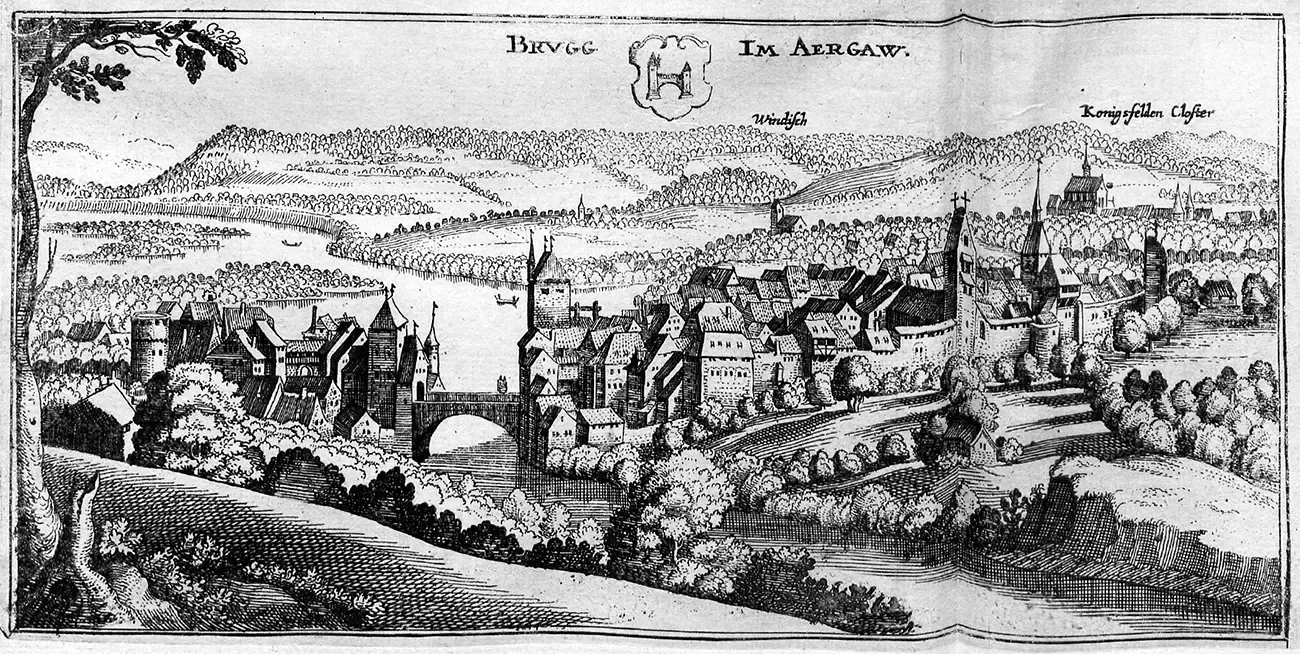
Brugg is first mentioned in the Acta Murensia (page in German) in 1064 as “Bruggo”. In this document, Werner I, a son of Radbot, confirms ownership of property in the vicinity of Brugg to the Muri monastery in a document. The name says it all: Brugg (page in German) is located at a narrow point in the River Aare, ideal for the construction of a bridge. This bridge, as well as the black tower on the right and the customs house on the left side of the Aare, still feature in the town's coat of arms today as symbols of the town.
The wooden bridge – initially a simple structure - and the black tower were built by the Habsburgs, probably by Count Albrecht III around 1180. During this period, Brugg increasingly took on an urban character. Around 1230, the Habsburgs even left Habsburg Castle to settle in Brugg where they built a castle that was more comfortable than their previous drafty one. It was also located directly on the trade route and gave them control over customs revenues.
The town became the most important centre for the Habsburgs in their ancestral lands, the Eigenamt (page in German) between the Aare and Reuss rivers, before their focus shifted towards Austria. In 1284, Brugg was granted town rights by King Rudolf I of Habsburg.
In 1415, the town suffered the same fate as the other Habsburg possessions in Aargau (except in Fricktal): it was taken by the Swiss Confederates. Brugg surrendered to the advancing Bernese troops without a fight and retained its town privileges in return. Brugg was particularly hard hit in 1444 during the Old Zurich War (page in German): the Habsburgs invaded the town. It was pillaged, some houses were set on fire, and many citizens were released only after paying a ransom.
Like the rest of Europe, Brugg also suffered outbreaks of the plague over the centuries. In 1541, a quarter of the population of Brugg died in an epidemic (page in German). From the 16th to the 18th century, Brugg was also known as the “town of prophets.” Indeed, many young people from Brugg went on to become pastors.
Traces of the Habsburgs today
The striking black tower (page in German) is the oldest building in Brugg and the town's landmark. From the bridge, on the side of the tower facing the Aare, you can see a lintel with a pre-Romanesque arch and a walled-in medieval sculpture.
It was not until the 16th century that the tower reached its current height of 25.70 metres. It is easy to distinguish the upper part from the lower part, which dates back to the Habsburg era: the lower part consists of Roman shell limestone blocks brought from Vindonissa and recycled, while smooth tuff blocks were used for the upper part. During official city tours, the top floor of the tower offers an excellent view of the Aare Gorge, the moated castle and the idyllic old town.
Brugg today